


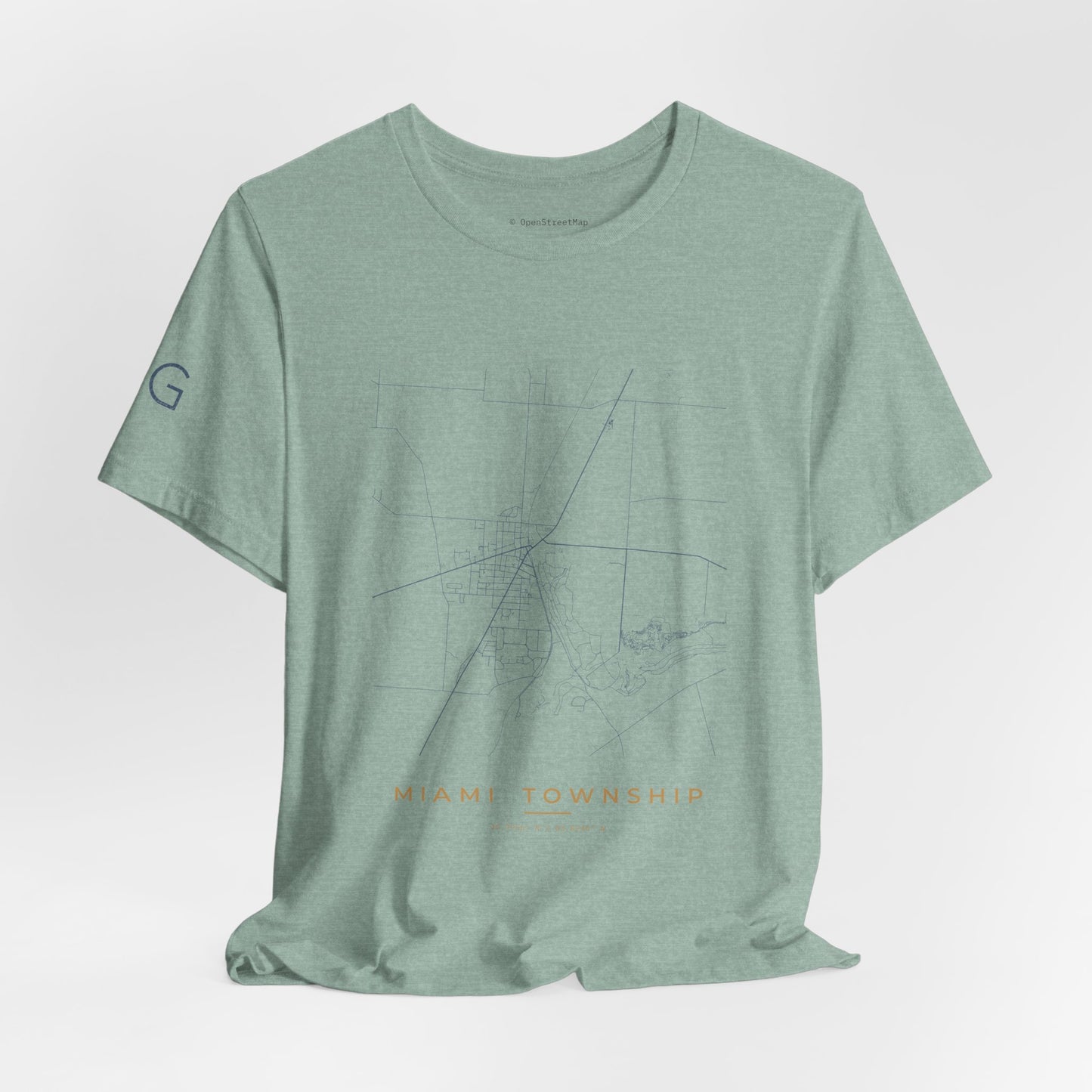
The township the Little Miami cut through, where the river drops over rock at Clifton and turned its first mill.
The first mill went up where the Little Miami drops over rock at Clifton. Owen Davis settled there and built it, and a mill is a reason for a road, and a road is the start of a township. Miami Township was organized on June 8, 1808, taken from Bath and Xenia, and it was big: it reached north into what is now Clark County and east across ground that later became parts of Cedarville and Ross. The county kept carving it down as it filled in. The first election was held at a house in Yellow Springs, and James Stewart counted the taxpayers that year.
At Clifton the Little Miami runs over rock, and that drop is what turned the wheel. An 1809 account of the falls of the Little Miami measured a twelve-foot pitch over two hundred feet of river, water the writer judged important to the county, which in that country meant water enough to run a mill. The same account notes old walls and mounds standing in several parts of the county, earthworks raised by people who were gone before the township had a name. The river runs off to the Ohio, the Mississippi, and the Gulf, so the rock that powered Clifton sits at the head of a continental drainage.
Owen Davis was a Welshman and a soldier of the Revolution, a hard man who once stood in open court, told his son-in-law the judge that he had whipped a hog thief, and asked what the fine would be. He built the first mill in this township, at the falls at Clifton. He died near there in 1818 and lies in the old Clifton graveyard, his wife Letitia beside him. The mill that made the town is gone, but in 1900 the stone foundation Davis laid by the river could still be found, which is about all a man leaves: the footing of the thing he built.
The river still drops over the same rock. The mill it turned is down to a foundation, and the man who built it lies in the Clifton graveyard.