


The town the first settlers built from their own boat, taking the pirogue apart plank by plank to make the first house on dry ground.
In March 1796 three small parties left Cincinnati for the river junction to the north, two cutting overland and one going by water. The water party reached it first. Twelve people, the Thompson and McClure families and the diarist Benjamin Van Cleve among them, poled a long pirogue up the Great Miami for ten days and tied up on April 1 at the head of what is now St. Clair Street, where the Mad River comes in. They had little to build with, so they took the boat apart, plank by plank, and raised it again on dry ground as the first house in Dayton.
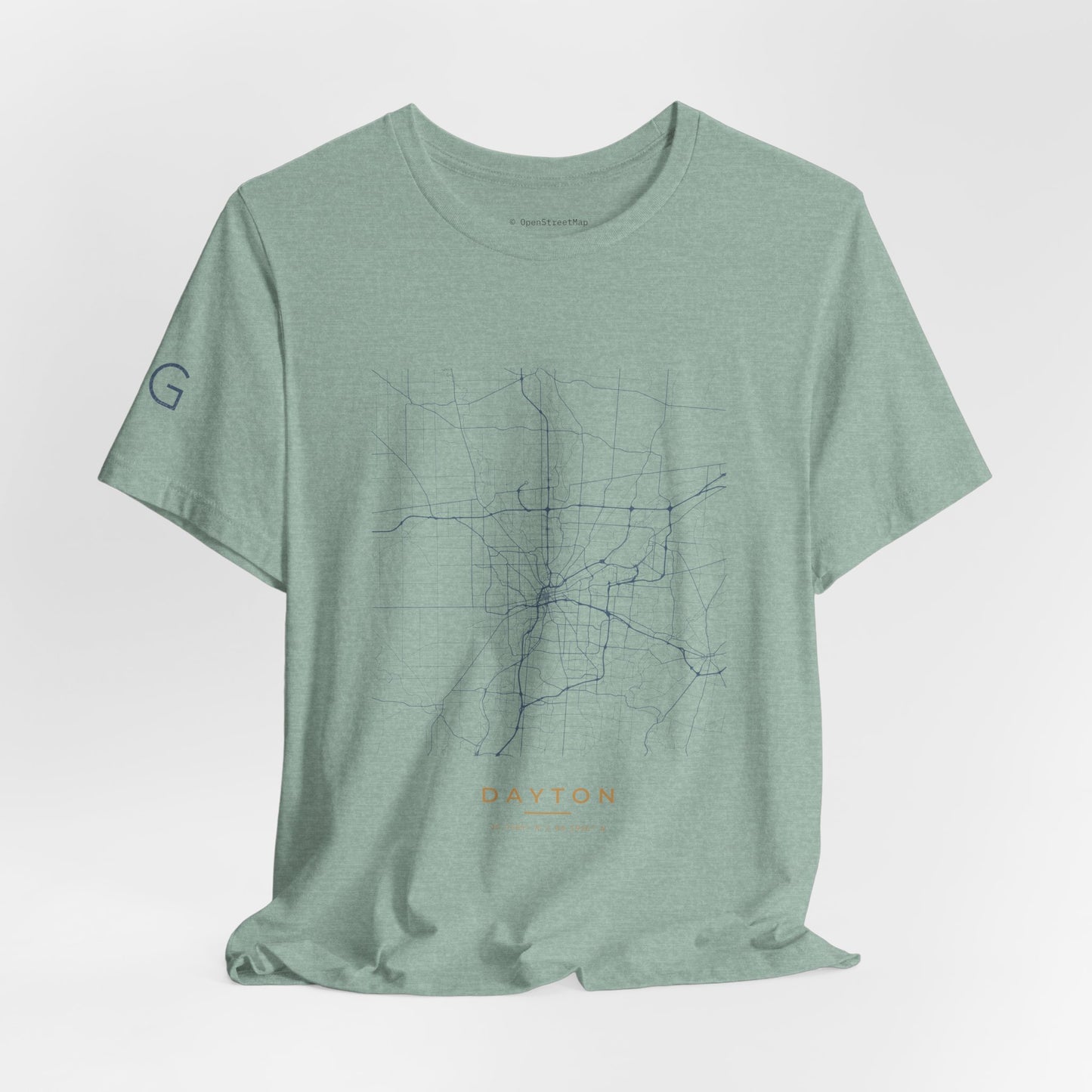
Dayton sits where the water gathers. The Stillwater and the Mad come down to meet the Great Miami here, with Wolf Creek joining from the west, four streams folding into one channel that runs south to the Ohio. The rivers were the only road in, which is why the boat came before the wagon. They were also the reason the town flooded. In March 1913 the same four streams rose together and put downtown under water, and out of that came the Miami Conservancy District and the earthen dams that hold the rivers back. The water made the place and nearly unmade it.
The town carries the name of a man who never saw it. Jonathan Dayton, the youngest signer of the Constitution, was one of four speculators who bought this ground from John Cleves Symmes in 1795, and he stayed in New Jersey. Then the deal collapsed. Symmes had never paid the government for the land, so the sale was void, and the families who had bought lots stood to lose them. By 1802 only five families were left. Daniel Cooper, the surveyor, petitioned Congress, was made the town's proprietor, and saved their titles. The namesake never came. The surveyor stayed.
The boat that brought the first settlers became their first house, and both are gone now. The rivers that carried it in still meet where the town began.